BYD gains EU registrations as Chinese brands grow
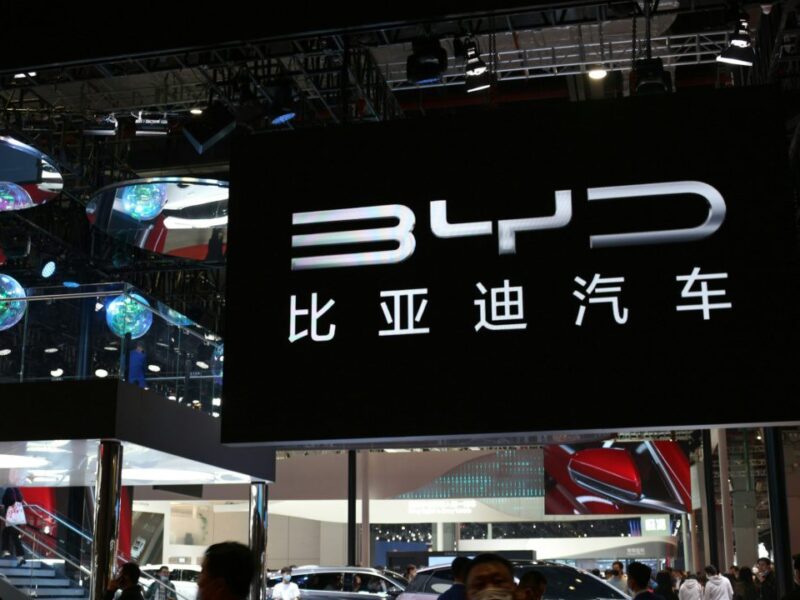
BYD’s presence in Europe continues to expand, with October registrations showing a sharp year-on-year increase across EU markets. Dataforce figures indicate that Chinese brands collectively saw strong volume growth during the month, suggesting a potential shift in the competitive mix within Europe’s EV sector. For eeNews Europe readers, this matters because rising registrations for Chinese OEMs, such as BYD, may translate into steady demand for traction inverters, on-board chargers and battery management electronics aligned with their preferred system topologies.
Registration trends for BYD and other Chinese brands
Across the EU, BYD registered approximately 13,350 vehicles in October, an increase of 195% compared with the same month last year, reaching an estimated 1.5% market share. Including EFTA and the UK, the brand’s total reached about 17,470 units, up more than 200% year on year.
Chinese brands as a group approached 75,000 units in October in Europe, nearly doubling last year’s volumes and accounting for roughly 6.8% market share. SAIC was reported at around 18,847 units, up 56% with a 2.1% share, while Tesla posted approximately 5,647 units, down 48% with a 0.6% share.
These numbers come against a backdrop of diverging national trends. According to the same dataset, Germany grew 7.8% in October, France 2.9%, Spain 15.9% and the UK 0.5%, while Italy declined slightly by 0.5%.
Potential implications for Europe’s EV supply chain
The increase in registrations for Chinese OEMs may potentially create new design-in opportunities for suppliers in Europe. BYD’s platform mix, typically centred around high-efficiency electric drive units, LFP and blade-cell battery systems and integrated power electronics, could influence demand for specific semiconductor classes, wide-bandgap switches and DC-DC converters.
For Tier-1s and semiconductor manufacturers, a rising share of these brands may mean more engagement with vehicle architectures that differ in voltage strategy, thermal design and charging behaviour from those used by long-established European OEMs. This could encourage further alignment on testing standards, EMC requirements and inverter packaging approaches as Chinese models expand across additional EU markets.
 If you enjoyed this article, you will like the following ones: don't miss them by subscribing to :