Cornerstone aims for a Github for silicon photonics
The Cornerstone project in Southampton is aiming to develop an open source repository for silicon photonics hardware.
With STMicroelectronics heading back into the silicon photonics market and Nvidia working with TSMC to push the technology to its limits, there is increased interest in producing such devices.
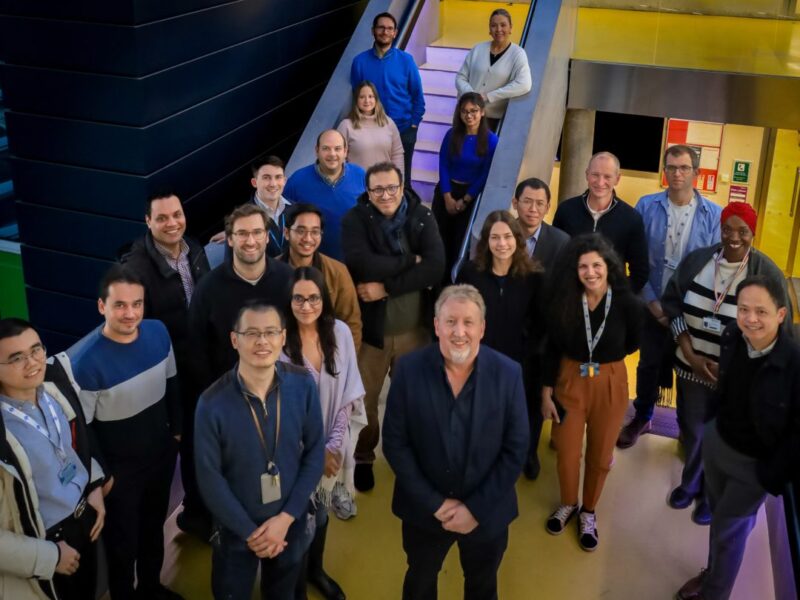
Prof Callum Littlejohns has been running a 200mm silicon photonics foundry at the University of Southampton in the UK for many years to do just this. Now the Cornerstone commercialisation centre has been funded as a key centre for the technology, but with open source at its heart.
“We are definitely up and running now with the Cornerstone innovation centre,” he said. “We’ve been seven years for the foundry prototyping service and the aim is to prepare researchers for the real world and volume production. The vast majority of what we have done is silicon based so it is CMOS compatible. The only bit that isn’t is the integration of the light sources on the back end of the flow.”
The process design kit (PDK) that describes the process is the key. For easy migration to large scale production, this has to be compatible with many different silicon photonics processes.
“The PDK that we work with is managed by us at the moment and is all open source. We have a range of platforms that overlap with commercial facilities which are all very slightly different so there are always teething issues. That’s one of the key things we want to address, which is to validate our open source PDK with the commercial foundries, and we are looking at whether we can partner with companies that convert a Cornerstone design to a foundry design.”
“This would simplify a transfer function at cornerstone or a transfer function at a commercial facility,” said Littlejohns. “That’s one of the key challenges we want to address in this centre.”
He also wants to expand the PDK. “We have a PDK team but we ant to launch a truly open source PDK where others can add their devices to it. That will be coming hopefully this year,” he tells eeNews Europe. “Some people won’t want to do it but there is scope for others. With a central repository that we will oversee and the data will be compatible with the EDA tools or convert a format that will be compatible. We also add our building blocks, so it would be a Github for photonics.”
ST heads back into silicon photonics with mass production at Crolles
He has big plans for the project, including adding in manufacturing data.
“The components that you use to build a circuit absolutely could be open source so it should be possible to build and model circuits using open source so it is becoming more accepted and getting momentum and the hope is that the foundry is open source as well as we will be sharing manufacturing data, optical performance and all of this will be embedded in the PDK.”
“We are talking to companies that have the vision to deliver that,” he said.
AI could well be an opportunity for the PDK conversion. “We also have a side project to get the data out and available to people. That would be a game changer that would add huge value, as long as it helps get the technology into the real world we want to support it,” he said. “We do have a little bit of innovate UK money to help industry so a call in the next year so that could help industry deliver our mission.”
He is confident that he can build the momentum to support an open source repository in the same way that Github has been wildly successful for code.
“When we wrote the proposal 75% of respondents said they were likely to contribute to an open source PDK, and half of the respondents were industrial companies. The measure for success is how many companies we help to start to get onto an industry specialist process,” he said. “Many of the software providers use our PDK in their training as we are open source, so that’s a good starting point,” he said.
The centre already works with Synopsys, GDS factory, Luceda and Cadence. “All these all partners so we want to reduce barriers to entry to these tools,” he said.
To achieve the pipeline of startups, particularly for sensors in healthcare, Cornerstone is working with the Silicon Catalyst accelerator. The Cornerstone centre will also license IP into companies, helping them to grow with a robust supply chain and helping people understand what is going on in the UK and who to talk to, he says.
But the silicon photonics foundry is also international. “The only constraint is when we are distributing funding it has to be for the UK, but for the support and foundry service we are open to anyone. We have shipped chips to 24 different countries, over 100 entities, and the services will have a UK focus but we value the inputs internationally,” he said.
“Part of the aim is to act as the UK voice with things like the Photon Delta international roadmap in the Netherlands and to policy makers and the public in the UK but we need to make sure that our members trust us to do that. And we are in Horizon Europe, and there will be calls that state using a specific site, so we are open to that,” he said.
Southampton is also part of the PIX Europe pilot line which starts in May and is led out of Spain. This shows that the technology is complementary, he says, and there are plans for volume foundry for silicon nitride in Spain as well that could be part of the offering. “What Cornerstone brings is complementary. We are not really competing with the foundries. If they have someone feeding customers in obviously they will like that,” says Littlejohns.
www.cornerstone.sotonfab.co.uk/
 If you enjoyed this article, you will like the following ones: don't miss them by subscribing to :