European secure IoT satellite set for launch
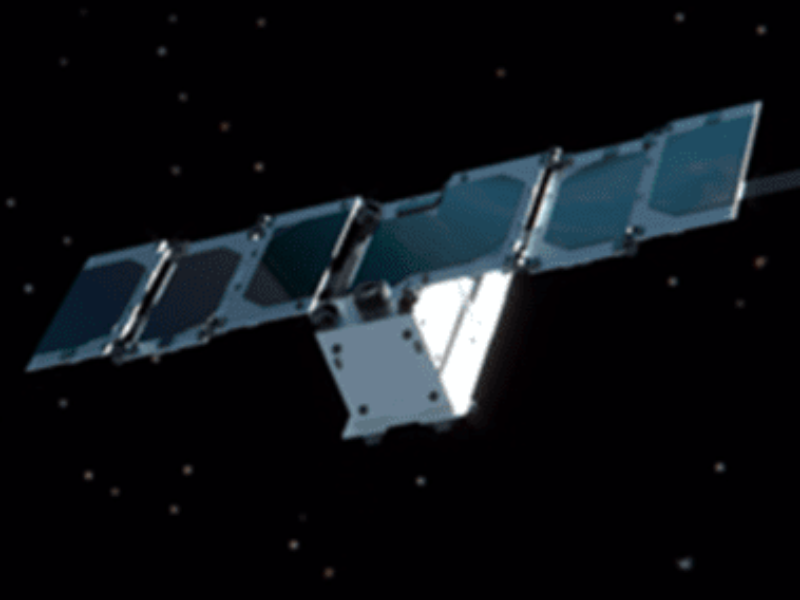
WiseKey in Switzerland is planning to launch a post-quantum satellite next month for securing the Internet of Things (IoT).
The WISeSat 2.1 is developed with WISeSat.Space of Germany and will use the WISeKey Quantum RootKey as part of a space-based Proof-of-Concept.
The WISeKey Quantum RootKey is a hardware-based root-of-trust technology, designed to resist quantum decryption attacks by securing key generation, storage, and management directly on the satellite and is implemented in silicon from WiseKey silicon subsidiary SealSQ using its RISC-V microcontroller and VAULTIC secure elements.
- SealSQ to acquire French chip design house IC’Alps
- RISC-V secure microcontroller renames to SealSQ
- European design house joins Intel foundry alliances
The launch on a SpaceX Falcon rocket includes the ability to establish secure, encrypted communications with WISePhone mobile devices, and second, the integration of SEALCOIN, a decentralized agent embedded in the satellite enabling machine-to-machine (M2M) transactions from space.
SEALCOIN, another subsidiary of WiseKey along with SealSQ, has developed technology to support decentralized satellite-initiated transactions with IoT devices without human intervention. This is Hedera’s Decentralized Ledger Technology (DLT) with transparent, tamper-proof, and autonomous transaction capability, paving the way for a scalable transactional IoT infrastructure.
The rootkey uses NIST-recommended post-quantum algorithms such as CRYSTALS-Kyber and CRYSTALS-Dilithium, the RootKey enables end-to-end secure authentication, encryption, and data integrity, even under the computational power of future quantum computers.
This works with the FOSSA IoT platform to enable microtransaction-driven data exchanges between fully off-the-grid IoT devices, with each data set cryptographically signed at the source device for integrity and trust.
For the Device-to-Device Exchange via satellite, a request for data is initiated by one IoT device and fulfilled by another using SEALCOIN as the value exchange layer. The responding device acts as a bridge to the WISeSat network through a REST API, retrieving data from the satellite-linked database, which has been securely signed by the source device.
Each exchange is recorded and settled securely and efficiently via the SEALCOIN token on the Hedera blockchain network.
The proof of concept aims to prove the feasibility of executing secure, decentralized, satellite-enabled data transactions between machines in geographically isolated or infrastructure-deficient environments such as smart agriculture, environmental monitoring, autonomous logistics, and defence applications.
“Our goal with SEALCOIN has always been to make transactional IoT borderless, scalable, and secure,” said Carlos Moreira, CEO of WISeKey Group. “With this demo, we’ve not only expanded that vision into space but opened doors to solutions for regions with no cellular or terrestrial coverage”.
SEALCOIN’s architecture is inherently modular, supporting a plug-and-play approach to new types of sensors and satellite operators, further enhancing its potential for global deployment.
The WISeSat 2.1 mission positions Europe and its allies to strengthen their sovereignty in space-based communications at a time of growing geopolitical and cybersecurity tensions. By delivering a fully sovereign, quantum-resistant satellite security infrastructure, SealSQ demonstrates its capability to secure the most critical layers of global digital trust.
WISeSat is gradually integrating multiple layers of post-quantum and quantum-related technologies designed to harness the unique conditions of space, such as microgravity, to enable breakthroughs that are challenging or impossible to achieve on Earth.
www.sealsq.com; www.wisesat.space
 If you enjoyed this article, you will like the following ones: don't miss them by subscribing to :