
Intel introduces Core Series 2 Processor, expands edge AI portfolio
Intel has introduced a new industrial-ready processor platform designed for real-time edge workloads, alongside a healthcare-focused AI development suite. The announcements were made at embedded world 2026 in Nuremberg and highlight the company’s growing focus on edge computing and AI-enabled applications.
For engineers and developers working with edge systems, the news signals new hardware and software tools aimed at deterministic industrial control and AI-powered healthcare monitoring. Intel says the latest offerings are intended to simplify complex edge architectures while enabling faster innovation across sectors.
Core Series 2 tackles industrial real-time performance
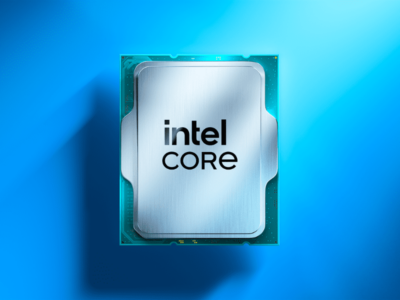
The new Intel Core Series 2 processors with P-cores are positioned as an industrial platform for mission-critical edge applications, where timing precision and reliability are essential. These environments often require processors capable of running multiple critical workloads simultaneously, such as safety systems, control loops, and real-time analytics.
Traditional processors frequently force designers to compromise between computational performance and deterministic behavior, often pushing developers toward multi-processor architectures. According to Intel, the new Core Series 2 aims to eliminate that trade-off.
Compared with AMD’s Ryzen 7 9700X, Intel claims the new processors deliver up to 4.4x lower maximum PCIe latency, up to 2.5x more deterministic response time, and up to 3.8x better deterministic performance. Multi-thread performance is also said to improve by as much as 1.5x.
“Intel continues to lead in edge computing, which remains one of our fastest-growing business segments,” said Dan Rodriguez, Intel corporate vice president and general manager of the Edge Computing Group. ” With the introduction of Core Series 2, our CES launch of Core Ultra Series 3, and our expanding Edge AI Suites, we continue to deliver comprehensive platforms that meet diverse edge customer needs with breakthrough performance, reliability, and integrated AI acceleration.”
The processors are intended for use in industrial automation, robotics, machine vision, and other applications where deterministic performance and predictable latency are essential.
Healthcare AI suite targets patient monitoring
Alongside the processor launch, Intel previewed a new Edge AI Suite for Health & Life Sciences. The software package provides validated reference pipelines and benchmarking tools aimed at developers building AI-powered patient monitoring systems.
Healthcare environments are increasingly adopting connected monitoring systems that combine multiple sensors and AI algorithms. Intel’s suite demonstrates several multimodal workloads running locally on its processors, including AI-based ECG arrhythmia detection, remote photoplethysmography, and anonymous 3D visual tracking.
Rather than relying on synthetic benchmarks, the company says the suite enables OEMs, ODMs, and independent software vendors to test hardware platforms using realistic healthcare scenarios.
The new AI suite complements Intel’s broader edge portfolio, which now includes the recently launched Core Ultra Series 3 processors and the new Core Series 2 family. Together, the platforms are intended to support both deterministic industrial control and advanced AI acceleration at the edge.
Systems based on Core Ultra Series 3 and Core Series 2 processors are available now, while a preview version of the Health & Life Sciences Edge AI suite is currently accessible on GitHub. General availability is planned for the second quarter of 2026.
 If you enjoyed this article, you will like the following ones: don't miss them by subscribing to :