
Meet the wind turbine blade re-cyclers
What to do with the ‘end of life’ wind turbine blades? A team of Washington State University worked on a new way to recycle theses enormous blades
From the WSU report:
A new method to recycle wind turbine blades without using harsh chemicals resulted in the recovery of high-strength glass fibers and resins that allowed Washington State University researchers to re-purpose the materials to create stronger plastics.
The innovation provides a simple and environmentally friendly way to recycle wind turbine blades to create useful products.
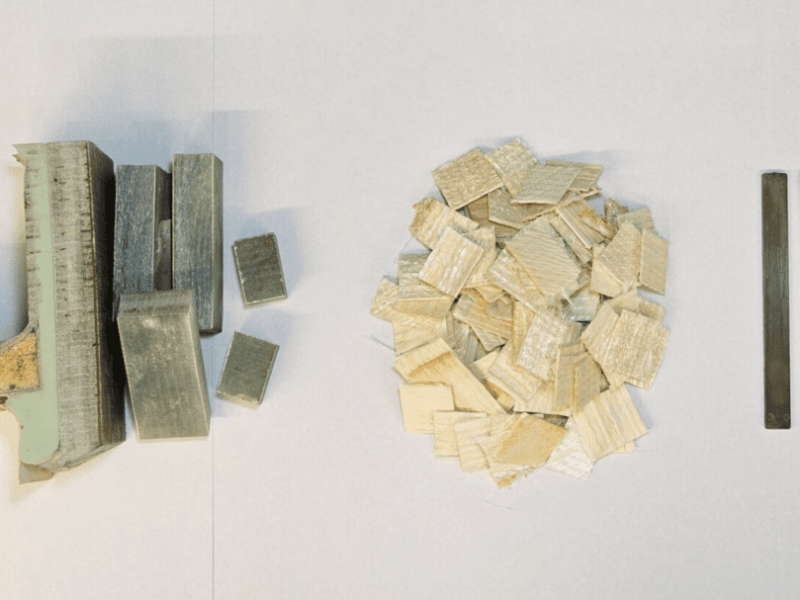
The team of researchers cut the lightweight material that is commonly used in wind turbine blades, called glass fiber-reinforced polymer (GFRP), into approximately two inch-sized blocks. They then soaked the flakes in a bath of low-toxicity organic salt in pressurized, superheated water for about two hours to break down the material. They then re-purposed its components to make stronger plastics.
“It works very well, especially considering the mild conditions that we applied,” said Cheng Hao, a former graduate student in the School of Mechanical and Materials Engineering and co-first author on the paper. “The solvent is a green solvent, and also the temperature is acceptable for this purpose.”
The GFRP material has traditionally been very difficult to recycle. While thermoplastics, the type of plastic used in milk bottles, can be melted and easily re-used, the glass-fiber composites are typically made with thermosets. These types of composites are cured and can’t easily be undone and returned to their original materials. The first generation of modern wind turbines made of composites from the 1990s are now reaching the end of their lifetimes, creating a significant challenge for disposal. The glass fiber-reinforced material makes up about two-thirds of a wind turbine blade’s total weight. Furthermore, when the blades are made, about 15% of the material is also wasted in manufacturing.
 If you enjoyed this article, you will like the following ones: don't miss them by subscribing to :