Mercedes-Benz and NVIDIA launch autonomous S-Class
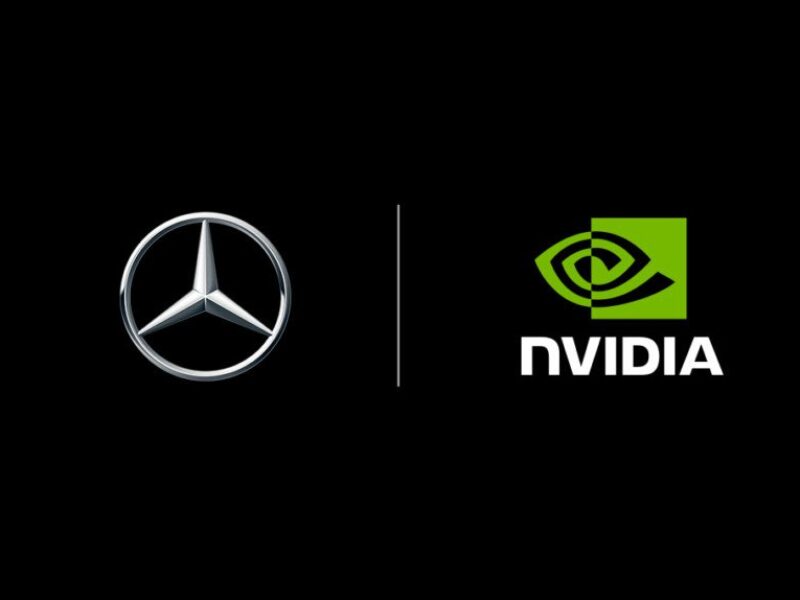
Mercedes-Benz has pulled the wraps off a new S-Class designed for the AI era, built on NVIDIA’s DRIVE AV platform and engineered with a level 4 (L4)-ready autonomous architecture. The vehicle combines the German automaker’s long-standing safety focus with NVIDIA’s full-stack autonomous driving technology.
This launch is a clear signal of how advanced AI, high-performance computing and automotive-grade safety engineering are converging in production vehicles. It also highlights how partnerships between legacy OEMs and AI platform providers are shaping the next phase of automated mobility, from premium cars to robotaxis.
AI and safety at the core of the new S-Class
The new S-Class runs on Mercedes-Benz’s MB.OS and is equipped with the NVIDIA DRIVE Hyperion architecture and full-stack NVIDIA DRIVE AV L4 software. The platform is designed to support future robotaxi and chauffeured mobility services, while maintaining a safety-first approach.
According to NVIDIA, the system uses end-to-end AI and a parallel classical driving stack running side by side. This dual-path approach is part of the NVIDIA Halos safety system and is intended to ensure predictable, reliable operation even in complex or unexpected driving situations.
“Mercedes-Benz has set the standard in the automotive market, building cars defined by exquisite craftsmanship and safety engineering,” said Jensen Huang, founder and CEO of NVIDIA. “Five years ago, NVIDIA began working with Mercedes-Benz to help carry that legacy into the AI era.”
Beyond private ownership, the S-Class is also positioned for shared mobility. As part of NVIDIA’s previously announced partnership with Uber, NVIDIA plans to deliver premium autonomous rides based on the new S-Class through Uber’s global mobility platform.
Handling the long tail of real-world driving
NVIDIA DRIVE AV is designed to move beyond rule-based automation by analyzing complex environments and reasoning through multiple options in real time. The software is trained at scale on NVIDIA DGX systems and validated using high-fidelity simulation built on NVIDIA Omniverse NuRec libraries and NVIDIA Cosmos world models.
At the hardware level, NVIDIA DRIVE Hyperion integrates redundant compute, multimodal sensor diversity across cameras, radar and lidar, and software stack diversity. This “defense-in-depth” design aims to eliminate single points of failure, a key requirement for L4 autonomy.
The architecture is primarily targeted at premium robotaxi and chauffeured services, where uptime, comfort and trust are critical. NVIDIA says this approach allows the same platform to support both advanced level 2 systems and L4-ready automated driving in production vehicles.
By combining large-scale AI training, simulation, safety validation and tight integration with Mercedes-Benz vehicle platforms, the new S-Class extends the brand’s safety leadership into the autonomous driving era. The result is a flagship model that showcases how AI-driven autonomy can be introduced without compromising quality, comfort or safety.
 If you enjoyed this article, you will like the following ones: don't miss them by subscribing to :