Microchip and Hyundai explore 10BASE-T1S for in-vehicle networks
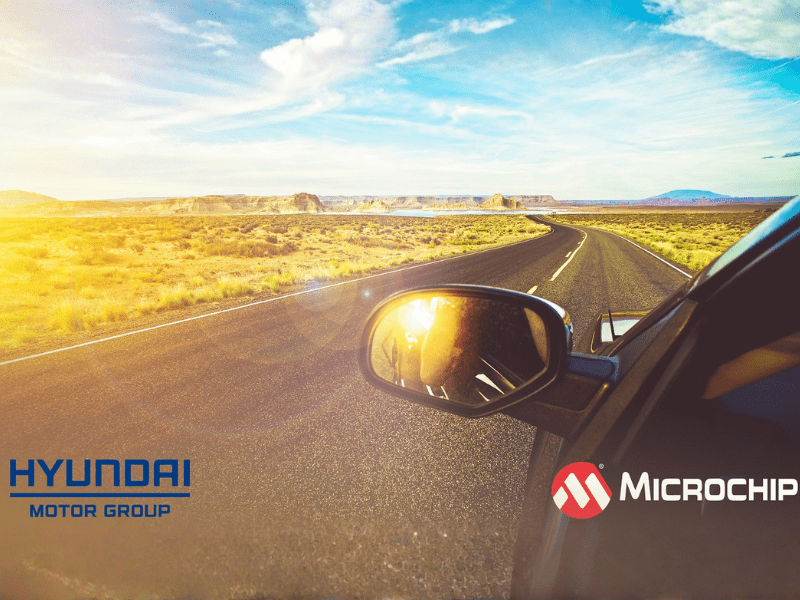
Microchip Technology and Hyundai Motor Group are collaborating to evaluate advanced in-vehicle network architectures for future vehicle platforms. The focus is on Ethernet-based communication to address growing data and connectivity demands in modern cars.
For eeNews Europe readers, the move highlights how carmakers are reassessing network topologies as software-defined vehicles, ADAS and electrification push bandwidth and integration requirements. It also signals broader industry interest in 10BASE-T1S as a potential alternative to legacy automotive buses.
10BASE-T1S as a building block for zonal architectures
The collaboration centres on 10BASE-T1S, a Single Pair Ethernet (SPE) technology designed for multi-drop communication over a single twisted pair. Unlike traditional point-to-point automotive Ethernet, 10BASE-T1S supports multiple nodes on the same network segment, which could simplify wiring in distributed vehicle architectures.
As vehicles integrate more sensors, actuators and domain controllers, automakers are increasingly looking at Ethernet to unify communications across previously segmented networks. According to Microchip, adopting 10BASE-T1S can reduce the need for bridging between standard and proprietary buses, potentially lowering system complexity and cost while streamlining integration.
Hyundai Motor Group is working with Microchip to evaluate the integration of the company’s 10BASE-T1S devices into future vehicle platforms, including electric vehicles and systems linked to autonomous driving and smart mobility. The cooperation also provides Hyundai with early access to product samples and technical support.
“As the automotive industry transitions to software-defined vehicles, the need for high-performance and scalable in-vehicle networks has never been greater. Our comprehensive portfolio of Single Pair Ethernet hardware and software solutions enables customers to reduce cost, risk, and time to market,” said Matthias Kaestner, corporate vice president of Microchip’s automotive, datacenter and networking business. “Our collaboration with Hyundai will support the development of next-generation in-vehicle network solutions that address the mobility needs of tomorrow.”
“Partnering with Microchip enables us to leverage their Ethernet expertise, to support next-gen vehicle connectivity.” said Hyundai Motor Group. “HMG will accelerate the adoption of 10BASE-T1S technology and enable the next generation of intelligent, connected vehicles.”
Extending Ethernet to the edge
10BASE-T1S is intended to extend Ethernet connectivity closer to edge devices within the vehicle, including sensors and actuators. By supporting multi-drop topologies, it may provide an alternative to CAN and LIN in certain use cases, particularly in zonal architectures where reducing harness weight and complexity is becoming a priority.
 If you enjoyed this article, you will like the following ones: don't miss them by subscribing to :