Molex eHV60 high-voltage connector targets auxiliary EV systems
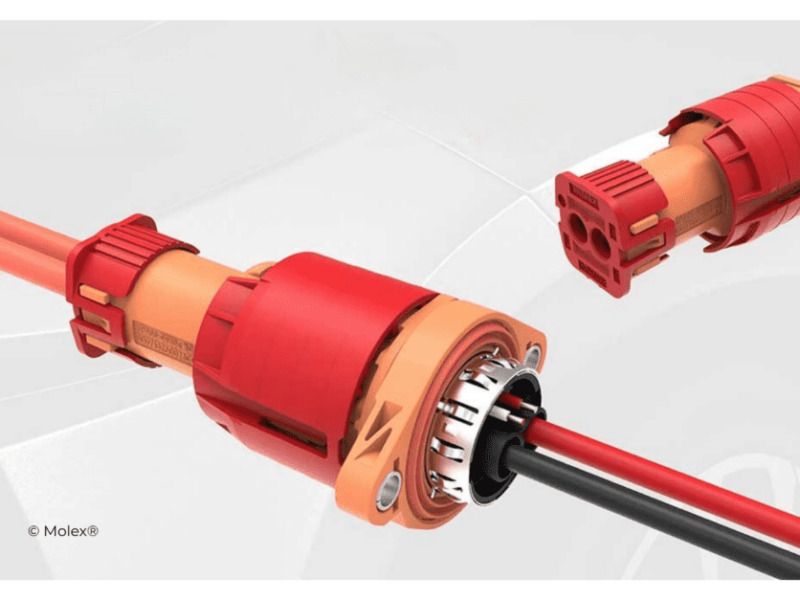
Molex has introduced the eHV60 high-voltage connector as the first member of its eHV high-voltage connector and terminal portfolio, aimed at auxiliary power functions in battery electric and plug-in hybrid vehicles. The eHV60 high-voltage connector is positioned for DC/DC converters, onboard chargers, electric compressors and e-axles in high-voltage powertrains.
eeNews Europe readers will find this relevant because the eHV60 high-voltage connector is designed as a potential drop-in option to existing auxiliary HV interfaces, with a smaller footprint, higher integration flexibility and compliance to familiar automotive standards, which are key considerations in ongoing BEV and PHEV platform updates across Europe.
Connector platform for auxiliary high-voltage systems
According to Molex, the eHV60 high-voltage connector is intended to provide secure and reliable high-performance electrical connections for auxiliary and primary systems in BEVs and PHEVs. It is specified for up to 1,000 V and 64 A at 80 °C, positioning it for mid-power roles in vehicle power distribution while maintaining insulation and creepage requirements typical of modern 800–1000 V architectures.
The company highlights auxiliary applications such as DC/DC converters, onboard chargers, electric compressors and e-axles, where packaging and thermal constraints can be tight. In these environments, the eHV60 high-voltage connector is described as having a footprint up to 30% smaller than comparable products, which could help engineers who are re-packaging inverters and power modules in zonal or skateboard platforms.
Compliance, EMI performance and dual sourcing
Molex positions the eHV60 as part of a broader high-voltage terminal and connector family designed to match global compliance and qualification expectations. The connector meets USCAR-2 and LV215 requirements and is validated electrically and mechanically as a drop-in alternative to established solutions, potentially giving OEMs and Tier-1s dual-sourcing options without major redesign of mating interfaces.
For EMC-sensitive power electronics, the eHV60 high-voltage connector uses a shielded interface intended to improve protection against electromagnetic interference and to support system safety in high-voltage environments. This is particularly relevant as EV platforms consolidate high-speed data links and high-power cabling in tighter spaces.
In the press material, Scott Whicker, SVP, president, Transportation and Innovative Solutions, Molex, states: “The new eHV60 aligns with Molex’s broader automotive portfolio to strengthen supply chain resiliency and reduce total manufacturing costs.” said Scott Whicker, SVP, president, Transportation and Innovative Solutions, Molex. “This newest extension to our eHV high-voltage connector portfolio offers a compact, efficient solution that increases sourcing flexibility while easing integration into space-constrained systems.”
Ecosystem, manufacturing footprint and availability
The eHV60 is introduced as part of a larger connector ecosystem that includes busbars, battery interconnects, cables, custom headers and 48 V automotive systems. Molex points to its facilities in North America, Europe and Asia, alongside its Global Reliability Lab, as the basis for qualification, reliability testing and regionalised production to support local programmes.
The eHV60 high-voltage connector is scheduled for availability in the first quarter of 2026 and will be the first product in the eHV family targeting high-voltage power distribution in electric and hybrid vehicles.
 If you enjoyed this article, you will like the following ones: don't miss them by subscribing to :