Rust integration demo targets AUTOSAR Classic migration
HighTec EDV-Systeme and Intellias say they have completed a Rust integration demonstrator for automotive applications running in an AUTOSAR Classic environment, combining Rust components alongside existing C/C++ code. The companies worked with ecosystem partners, including Vector Informatik, and used Infineon AURIX microcontrollers as the target platform.
For eeNews Europe readers, the work is a practical marker for how memory-safe Rust could be introduced into production-oriented AUTOSAR Classic stacks without a full rewrite. It also hints at what toolchain and integration constraints may show up when OEMs and Tier 1s trial incremental migration strategies for software-defined vehicles.
Why OEMs are looking at Rust inside AUTOSAR Classic
The partners frame Rust adoption around familiar pain points in embedded automotive software, particularly memory-safety-related defects and the knock-on effects on cybersecurity, validation effort, and schedules. In this project, the argument is that earlier detection of memory safety issues at compile time could potentially reduce late-stage fixes, while keeping existing AUTOSAR Classic investments in place as Rust is introduced for selected functions.
The approach is explicitly hybrid: rather than replacing established C/C++ codebases, the aim is to add Rust where it makes technical sense, then expand from there if engineering teams are comfortable with the workflow and tool qualification story.
Toolchain, MCU target, and an integration path
HighTec points to a safety-qualified Rust compiler (ISO 26262 up to ASIL D) intended to complement its automotive-grade C/C++ toolchain for Infineon AURIX MCUs, based on LLVM technology. Vector’s role is positioned around MICROSAR Classic and DaVinci tooling support for integrating application software written in Rust.
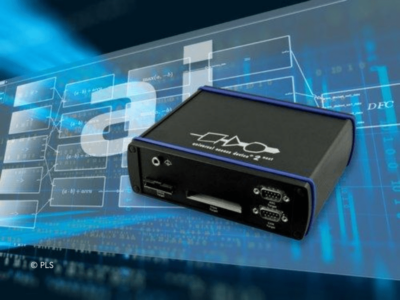
Intellias’ ECU Kit is used as the demonstrator backbone, with the Rust-based software components integrated into the AUTOSAR environment “without changing the system’s infrastructure,” based on an Infineon AURIX TriCore TC375. Intellias says the setup connects to its Automotive Technology Platform (IntelliKit) to simulate vehicle signals such as speed, battery charge level, and ultrasonic sensor inputs.
“Rust brings huge potential to automotive software development that still has to be exploited. Together with strong ecosystem partners like HighTec, Infineon, and Vector, we help customers to quickly and successfully migrate to Rust in an AUTOSAR classic environment while achieving immediate cost savings.”
“HighTec makes innovative open-source technologies, such as Rust automotive-grade for developing safety-critical automotive applications based on AURIX platforms. Through our collaborations with ecosystem partners like Intellias, our customers can overcome initial hurdles and accelerate their Rust migration projects, which we are happy to support with our highly optimized compilers designed for multi-architecture development.”
Both companies also plan to show related demos at CES 2026 in Las Vegas, with HighTec located in Infineon’s Demo Room W307 and Intellias at LVCC West Hall Meeting Space #3377.
 If you enjoyed this article, you will like the following ones: don't miss them by subscribing to :