TMR boost for VR and medical magnetic sensors
Neuranics in Glasgow has detailed the interface technology it is using with its tunnelling magnetoresistance (TMR) sensor for a new generation of virtual reality and medical applications.
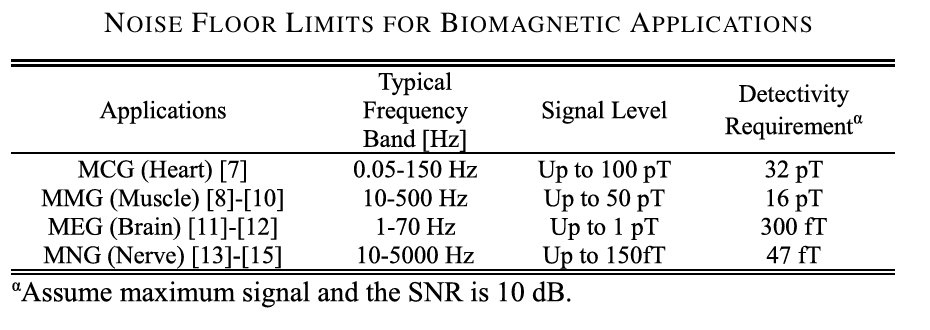
The architecture is optimised for biomagnetic measurement applications such as magnetocardiography (MCG), magnetomyography (MMG), magnetoencephalography (MEG), and magnetoneurography (MNG).
A TMR sensor converts the amplitude and direction of a magnetic field into a corresponding linear resistance value using magnetic tunnel junctions (MTJs). The function as resistive elements whose values must be measured using an electronic interface circuit. Neuranics is using a Wheatstone bridge to convert the variations in resistance into a differential voltage output that cancels any DC offset and minimizes thermal drift by rejecting common-mode resistance variations.
- Neuranics raises $8m for magnetic sensing
- Biomagnetic sensor startup with metaverse potential
- Six vie for £160m Glasgow City investment zone funding
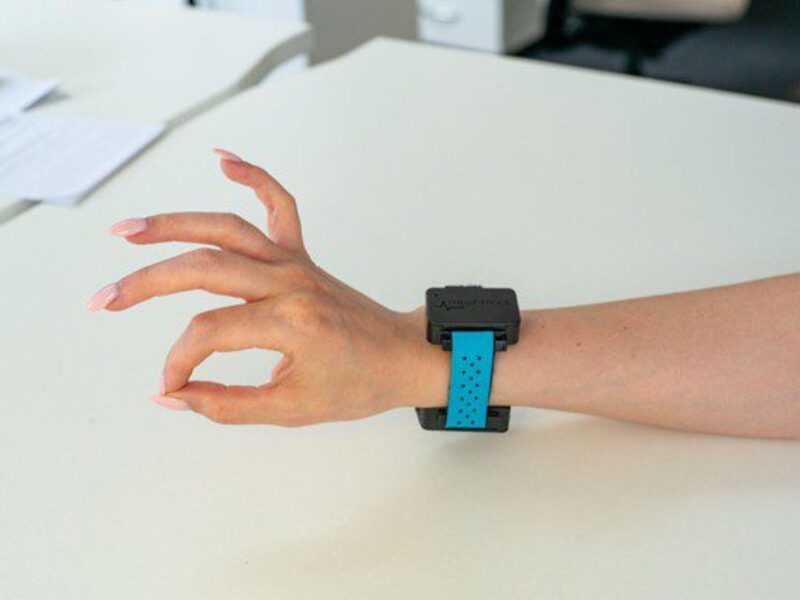
The sensor interface has low-power operation using standard voltage regulators and the system-level design works even without proprietary sensor specifications. The sensitivity for MMG in particular can allow more accurate detection of muscle movement from a wearable sensor for controlling VR and AR displays. The system can also detect heart movements from a single contact point through clothing.
Source: Neuranics
To achieve this, the company developed a noise model that links sensor sensitivity to key design parameters such as the Wheatstone bridge configuration, sensor biasing, and analog front-end (AFE) noise performance.
“We show how circuit choices impact TMR sensor performance. With a full bridge and tuned electronics, we hit pico-Tesla at 1 Hz without magnetic shielding.” said Prof Hadi Heidari, CTO and co-founder of Neuranics. “We now have a validated path forward to bring wearable magnetic biosensing out of the lab and into everyday use.”
The model is based on a detailed characterization of the TMR sensor and accurately predicts the influence of bias voltage and resistance mismatches on the power supply rejection ratio (PSRR). It shows that the PSRR can degrade to approximately 28 dB under a background magnetic field of 5 µT, allowing a detectivity of 7.4 pT/√Hz at 1 Hz without magnetic shielding,. The integrated rms noise of 20 pT within the 5–100 Hz band, under both near-zero and 5 µT magnetic fields.
The company is working with early partners on the wearable sensor and will be at the IFA exhibition in Berlin, Germany, at the end of the month.
The paper, “Electronic Interface Design Considerations for Biomagnetic Sensing Using TMR Sensors“, is at ieeexplore.ieee.org/document/11028614
 If you enjoyed this article, you will like the following ones: don't miss them by subscribing to :