Vector adds electric motor models to CANoe for early MCU testing
Vector has expanded its CANoe test environment with an option aimed at early-stage validation of electric motor control units. The CANoe Model Option Electric Motor is designed to allow developers to test motor control strategies before physical motor hardware is available.
For eeNews Europe readers working on automotive and industrial electrification, the announcement is relevant because it addresses a common development bottleneck: validating control software and fault behaviour early, without the need for high-power test benches or real motors.
Physical motor models for early validation
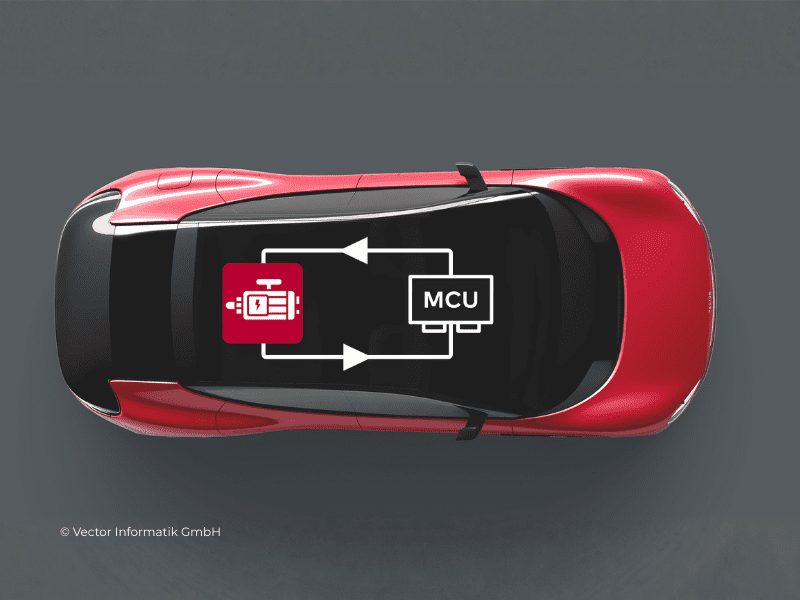
The CANoe Model Option Electric Motor includes preconfigured physical simulation models covering several common motor types, including permanent magnet synchronous motors, brushless DC motors, induction motors and conventional DC motors. According to Vector, the models close the control loop and generate realistic input signals for the motor control unit under test.
Because the interface operates at signal level rather than power level, the setup avoids high currents and voltages. The simulation runs on the FPGA of Vector’s VT5838 Multi-IO module, using high-frequency pulse-width modulated signals. This allows developers to exercise control algorithms under normal operating conditions and to introduce fault scenarios via CANoe at an early development stage.
Configuration and integration options
Vector says the preconfigured models can be loaded onto the FPGA module with a single step and then parameterised within CANoe to reflect the characteristics of a specific motor. For more complex use cases, open models based on a Simulink library are available, enabling the addition of components such as sensors or inverters.
The company positions the option for engineers developing motor control units for both actuators and traction applications. For system-level validation, the setup can be extended with a virtual test drive using Vector’s DYNA4 vehicle dynamics environment. This combination is intended to support optimisation and validation of control strategies earlier in the development cycle, potentially reducing later integration effort.
 If you enjoyed this article, you will like the following ones: don't miss them by subscribing to :